Exhibitors (REST API)
A2Z now also offers a REST-based import, which requires less setup than the old/SOAP API described below. To use it, ask your A2Z representative for the following two items only:
- Event ID
- Tenant ID
(The API Key, API Username, API Password, and Install Name used by the older SOAP-based import below are not needed for the REST import.)
To set up the import:
- Access the Conference App Builder (From our website, choose Organizer Login > EventPilot on the top right)
- Select your project
- Navigate to Expo > Exhibitors
- Click Add Import
- Give your data source a name, e.g. A2Z
- From the "Import Source Type" dropdown, choose A2Z (REST)
- Note: you will still see a plain A2Z option in this dropdown — that is the older SOAP-based import described above. Use A2Z (REST) for all new imports.
- Next
- In the Data step, enter the EventID and Tenant IDyou received from A2Z
- There is also an optional Custom Code field, used only if your organization has a custom parsing script
- Next
- Complete the field mapping (see below)
- Next
- Your import will complete. Review the Results tab, which will let you know if any records were skipped.
Field Mapping (REST)
Type
Exhibitor Type mapping works the same as the SOAP import: choose defaulttype (assigns "Exhibitor" to all records) if you don't use sponsor tiers, or upgradeLevelDescription if A2Z has upgrade levels configured — the REST API returns the level description directly, so there is no separate Upgrade Mapping step to fill in.
Auto-mapping
The default import will map these fields, which you can change:
- id > Exhibitor ID
- exhibitingAs > Organization Name
- description > Description
- This is now sourced from A2Z's onlineProfile field.
- You can instead map concatenated_description, which appends a "Categories" line built from A2Z's product subcategories
- url > Organization Website
- email > Email (pulled from the exhibitor's booth contact)
- If you map this field, it will display the exhibitor contact email in the exhibitor detail view. Change the Map to Where to -- Do Not Import --
- img > Organization Logo
- location > Location (this is the booth number)
- Same padding/prefix variants as the SOAP import: location_padded, location_prefixed, loc_prefix_no_pad
Optional Fields
- categories / subcategories (comma-separated) and categories_pipe / subcategories_pipe (pipe-separated — use these if your category names contain commas) — sourced from A2Z's product categories / subcategories
- hallCode — the hall label, if your A2Z event has multiple halls
- Custom fields configured in A2Z are automatically pulled in and labeled CF: <field name> — map any you want to display
Media (Press Releases & Social Media) — REST API
Both press releases and exhibitor social media links are available for import.
- EventPilot App Builder > Media > Media Data
- Click Add Import
- Give your data source a name, e.g. A2Z Social Media
- From the "Import Source Type" dropdown, choose A2Z Social Media (REST) or A2Z Press Releases
- Next
- Enter the same EventID and Tenant ID used for the Exhibitors import
- Next through field mapping — leave the automatic mapping in place
- Your import will complete. Review the Results tab for any skipped records.
- Repeat these steps to set up the other import source, if you are using both.
Note: unlike the SOAP API, the REST API does not expose a single "all press releases for the event" endpoint. Press releases and socials are pulled per exhibitor booth automatically as part of this import — no extra setup is required, but very large exhibitor lists may take slightly longer to fetch since each booth is queried individually.
Migrating from the SOAP Import
- Existing imports using the original A2Z (SOAP) source will continue to work — you are not required to switch.
- New imports should use A2Z (REST). It requires less setup (no API Key/Username/Password/Install Name — just Event ID + Tenant ID) and adds social media import support.
- To migrate an existing import: create a new import source with type A2Z (REST) and re-map your fields (most field names are unchanged — see the mapping notes above for the few that shifted). We recommend testing the new import side by side before disabling the old one.
- ATIV plans to retire the SOAP-based A2Z import once customers have migrated to REST; no retirement date has been set yet.
OLD/Deprecated - SOAP API setup:
Exhibitors
To use the standard exhibitor import from A2Z, do the following:
- Ask your representative at A2Z for the following items:
- API Key or Event Key (a long alpha numeric string that may look something like this: aaSAJE2yQKeKL1Kr5DZhiMIFX+w1jSzP02mBHTM7BLNsP0qldrKllYE38C9jGfElcd7W0uKCe5TGHcwl5im36xCBwoWCs=)
- API Username
- API Password
- Event ID
- InstallName
- Once you receive the endpoint and token, access the Conference App Builder (From our website, choose Organizer Login > EventPilot on the top right)
- Select your project
- Navigate to Expo > Exhibitors
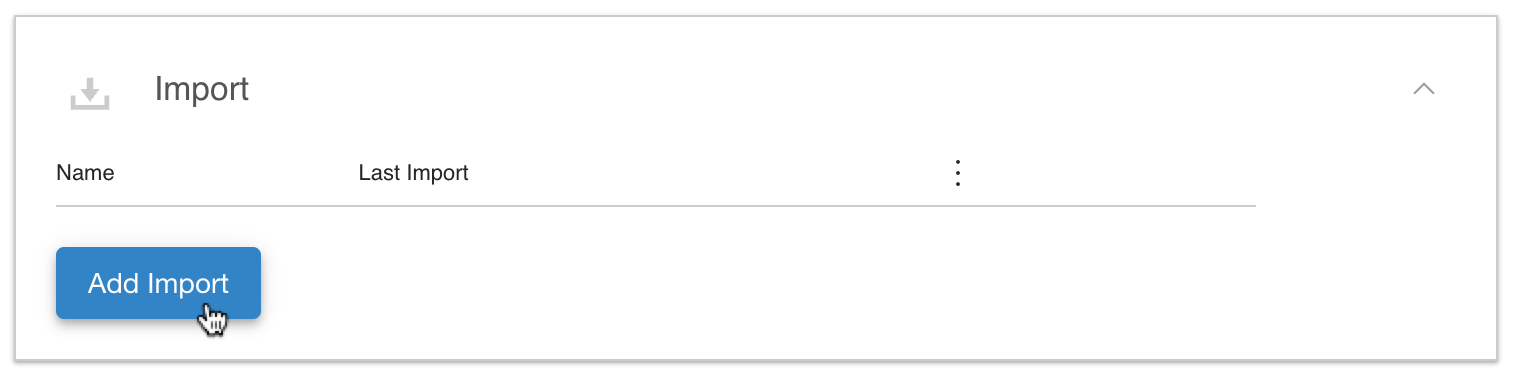
- Click Add Import
- Give your data source a name, e.g. A2Z
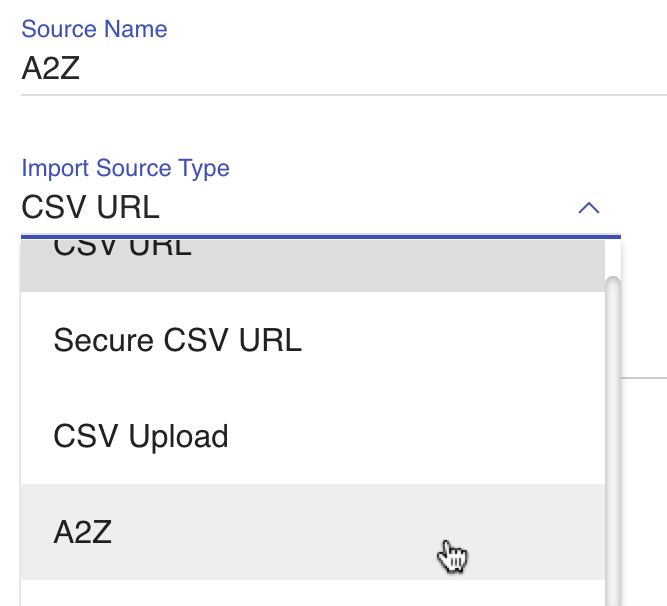
- From the "Import Source Type" dropdown, choose A2Z
- Next
- In the Data step, fill in the parameters you were provided
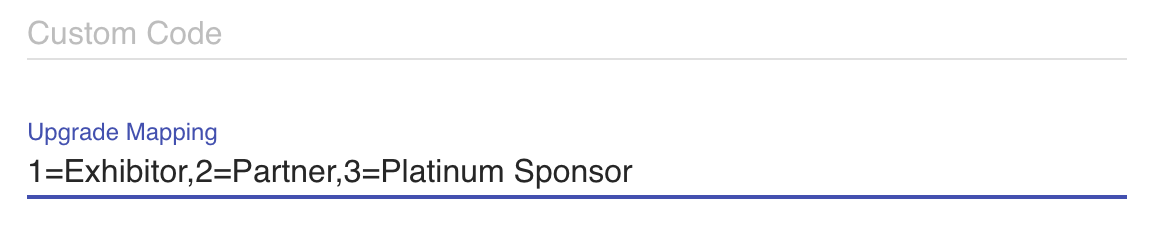
- If you have different sponsorship levels, A2Z assigns numeric upgrade Level IDs. For example, 1 means Exhibitor while 2 could mean Silver Sponsor and 3 could mean Gold Sponsor or whatever your upgrade levels are. In order to display the correct label for the upgrade levels, you will need to fill the field called Upgrade Mapping to tell the system what the numeric upgrade IDs actually mean.
- Note: For EventPilot Pro users, your Project Manager can help set up any customizations you may have purchased.
- If you have different sponsorship levels, A2Z assigns numeric upgrade Level IDs. For example, 1 means Exhibitor while 2 could mean Silver Sponsor and 3 could mean Gold Sponsor or whatever your upgrade levels are. In order to display the correct label for the upgrade levels, you will need to fill the field called Upgrade Mapping to tell the system what the numeric upgrade IDs actually mean.
- Next
- Complete the field mapping (see field mapping details below): Decide which fields from the A2Z API (shown in the middle column) you want to bring into the EventPilot App Builder.
- Tip: If you do not want to display certain data on the EventPilot platform, you can choose "Do Not Import" in the dropdowns on the right hand side.
- Next
- Your import will complete. Review the Results tab, which will let you know if any records were skipped.
Field Mapping
Type
The exhibitor type allows you to show sponsors above normal exhibitors if you have exhibitors that upgraded and there are different upgradeLevels in A2Z.
You will need to manually choose, which field is the designated Exhibitor Type.
If you do not have sponsor levels in A2Z, scroll to the defaulttype on the bottom and set it to Exhibitor Type. The defaulttype field assigns the type "Exhibitor" to all records.

If instead you have different upgrade levels and you have defined those as described above, choose upgradeLevelDescription as the Exhibitor Type.

Auto-mapping
The default import will map these fields which you can change:
- id > Exhibitor ID
- exhibitingAs > Organization Name
- description > Description
- You have different choices to map instead to:
- concatenated_description: combines multiple data fields into a single description:
- Description + address + phone number + categories
- onlineProfile
- concatenated_description: combines multiple data fields into a single description:
- You have different choices to map instead to:
- url > Organization Website
- email > Email
- If you map this field, it will display the exhibitor contact email in the exhibitor detail view. Change the Map to Where to -- Do Not Import --
- img > Organization Logo
- location > Location (this is the booth number)
- You have the choice to instead use:
- location_padded: if you use numeric booth number such as 1 and 2, the padding adds zeros to allow alphanumeric sorting.
- Sorting without padding: 1,10,2,20
- Sorting with padding: 0001,0002,0010,0020
- location_prefixed: this displays the term Booth in front of the location
- loc_prefix_no_pad
- location_padded: if you use numeric booth number such as 1 and 2, the padding adds zeros to allow alphanumeric sorting.
- You have the choice to instead use:
Optional Fields
- If you allow your exhibitors to upload press releases, ensure the following are mapped:
- media items > Media Items
- press release > If an exhibitor has a press release, this field is filled with the text "Press Release". Map to one of the filters that are not yet in use so you can create a prefiltered list to highlight exhibitors that have news.
- Note: if you have exhibitors with press releases, you will need to add the A2Z import in the App Builder > Media > Media Data > add the A2Z import source so the actual press release is pulled in and appears linked to the exhibitor.
- For your filters:
- You may have categories, subcategories, usertext1, usertext2, usertext3, usertext4 filled in in A2Z and you could choose to import as a filter keyword
- usertext 1 - if you leave that blank in A2Z, it defaults to the term Exhibitor
- You may have categories, subcategories, usertext1, usertext2, usertext3, usertext4 filled in in A2Z and you could choose to import as a filter keyword
Media (Press Releases)
You can also import press releases from A2Z. These are considered media items in EventPilot, like your full-text abstracts. To import these, take the following steps:
- EventPilot App Builder > Media > Media Data
- Click Add Import
- Give your data source a name, e.g. A2Z
- From the "Import Source Type" dropdown, choose A2Z
- Next
- Fill in the parameters you were provided
- Next to Field Mapping
- For this import, please leave the automatic field mapping in place to ensure the press releases display as expected.
- You can choose to display "Press Release" as a subtitle by mapping alttitle to Subtitle
- You can choose to use a custom icon by mapping either url1 or url2 to HTML Icon
- default icon (if neither is mapped)

- url1 displays this icon:

- url2 displays this icon:
- default icon (if neither is mapped)
- Next
- Your import will complete. Review the Results tab, which will let you know if any records were skipped.